Showing posts with label Science Journalism. Show all posts

Science Magazine Chooses ENCODE Results as One of the Top Ten Breakthroughs in 2012

Science magazine (published by AAAS) was one of the major news sources that fell hook, line and sinker for the ENCODE/Nature publicity campaign last September [Science Writes Eulogy for Junk DNA]. It even published a laudatory three page profile of Ewan Birney, the man responsible for misrepresenting the ENCODE results as evidence that most of our genome is functional [Ewan Birney: Genomics' Big Talker].

I was somewhat apprehensive when I saw that the editors of Science had picked the ENCODE results as one of the top ten breakthroughs [Genomics Beyond Genes]. Would the editors continue to promote the idea that most of the human genome is functional?

Read more »

Science Education at Eschaton 2012

One of the Saturday morning sessions at Eschaton 2012 was on science education. Eugenie Scott started off with a survey of various states (in the USA) that are passing laws promoting creationism. In my presentation I tried to explain the scientific facts that we know for sure then I described an example of Intelligent Design Creationist stupidity showing that they really have no idea what they are talking about. See: Breaking News: IDiots Don't Understand Genomes or Biology. PZ Myers finished of with a depressing summary of the state of science education in the USA.

In my talk I explained that I preferred a broad definition of science, one that emphasizes science as a way of knowing. My definition encompasses the activities of everyone who seeks knowledge and that includes people working in fields outside of the traditional science disciplines.

Eugenie Scott prefers a more restricted definition of science, one that refers to the activities of biologists, chemists, physicists, and geologists. Eugenie thinks there are other ways of knowing and she supports the idea that the actions of scientists are constrained by the rule of methodological naturalism.

Read more »

Science Journal Publishes More Gobbledygook

I don't know what's happening at Science these days. It got caught up in the arsenic affair last year and it recently made a fool of itself over the ENCODE publicity fiasco where it was completely duped by Ewan Birney.

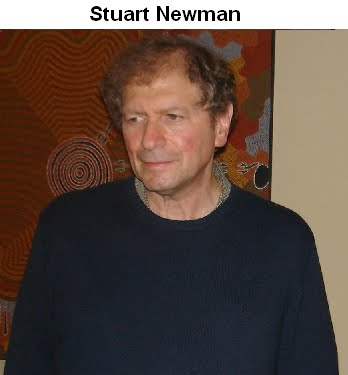
Now it has published the following "perspective" in the October 12th issue. It reads like a Sokal hoax but it's perfectly legitimate. That's actually how Stuart Neuman proposes to solve the mystery of the Cambrian explosion.
Stuart A. Newman
Physico-Genetic Determinants in the Evolution of Development
Science 338:217-219 [DOI: 10.1126/science.1222003]

Abstract

Animal bodies and the embryos that generate them exhibit an assortment of stereotypic morphological motifs that first appeared more than half a billion years ago. During development, cells arrange themselves into tissues with interior cavities and multiple layers with immiscible boundaries, containing patterned arrangements of cell types. These tissues go on to elongate, fold, segment, and form appendages. Their motifs are similar to the outcomes of physical processes generic to condensed, chemically excitable, viscoelastic materials, although the embryonic mechanisms that generate them are typically much more complex. I propose that the origins of animal development lay in the mobilization of physical organizational effects that resulted when certain gene products of single-celled ancestors came to operate on the spatial scale of multicellular aggregates.
Neuman was one of the Alternberg 16, a group of scientists who met in Altenberg, Austria in 2008. Their purpose was to develop a new theory of evolution. The proceedings were collected in a book edited by Massimo Pigliucci and Gerd B. M^uuml;ller, Evolution: The Extended Synthesis.

This story has been promoted by a rogue journalist named Suzan Mazur and she has written a book on the subject. Here's her interview with Stuart Newman, The New Master Of Evolution?. Elizabeth Pennisi, a senior editor at Science, helped publicize the Altenberg 16 back in 2008 by publishing an article in Science [Modernizing the Modern Synthesis]. She has been sympathetic to the bizarre views of some Altenberg 16 members so I suspect she's behind the publication of Stuart Newman's article in Science.


Ewan Birney: Genomics' Big Talker

My copy of Science arrived in the mail last week and I wasn't surprised to see the article by Elizabeth Pennisi on ENCODE Project Writes Eulogy for Junk DNA. Pennisi has long been skeptical about junk DNA. She advocates the position that what makes us human is hidden in the "dark matter" of the genome. She has never lost an opportunity to promote those scientists who claim to have discovered function in junk DNA so it was natural for her to fall hook-line-and-sinker for the recent ENCODE publicity campaign [see Science Writes Eulogy for Junk DNA].

What did surprise me was a three-page spread on Ewan Birney: Genomics' Big Talker, written by Elizabeth Pennisi. This is extraordinary. I don't know of another example where a leading science journal has promoted a young scientist in this manner. Of course, it's doubly extraordinary because, in this case, Science is promoting a scientist who just made some serious mistakes interpreting his own data! The man who is so prominently featured in the Sept. 7, 2012 issue of Science magazine is coming under serious criticism for letting publicity rule his science. He has almost single-handedly1 damaged the reputation of 400 scientists in the ENCODE Consortium and he did it, in part, because he was not knowledgeable about his own field of expertise! [see ENCODE Leader Says that 80% of Our Genome Is Functional and The ENCODE Data Dump and the Responsibility of Scientists]

UPDATE:A reader has reminded me that Science published two pages (online) on Felicia Wolfe-Simon at the time of the arsenic affair. Hmmmm ... is this the beginning of a pattern?

Read more »

Are All IDiots Irony Deficient?

As I'm sure you can imagine, the Intelligent Design Creationists are delighted with the ENCODE publicity. This is a case where some expert scientists support one of their pet beliefs; namely, that there's no such thing as junk DNA. The IDiots tend not to talk about other expert evolutionary biologists who disagree with them—those experts are biased Darwinists or are part of a vast conspiracy to mislead the public.

You might think that distinguishing between these two types of expert scientists would be a real challenge and you would be right. Let's watch how David Klinghoffer manoeuvres through this logical minefield at: ENCODE Results Separate Science Advocates from Propagandists. He begins with ....
"I must say," observes an email correspondent of ours, who is also a biologist, "I'm getting a kick out of watching evolutionary biologists attack molecular biologists for 'hyping' the ENCODE results."

True, and equally enjoyable -- in the sense of confirming something you strongly suspected already -- is seeing the way the ENCODE news has drawn a bright line between voices in the science world that care about science and those that are more focussed on the politics of science, even as they profess otherwise.
Read more »

Athena Andreadis Writes for Sceintific American: Junk DNA, Junky PR

Quite a few science journalists have clued in to the fact that they were massively conned by the ENCODE publicity machine. Turns out that the death of junk DNA was greatly exaggerated.

Here's what Athena Andreadis has to say on the Scientific American website: Junk DNA, Junky PR. Athena is a professor in the Department of Cell and Developmental Biology at the University of Massachusetts Medical School.
Read more »

Read What Mike White Has to Say About ENCODE and Junk DNA

One of the good things to come out of this ENCODE/junk DNA fiasco is that I've discovered a number of excellent scientists who aren't afraid to speak out on behalf of science. One of them is Mike White, a systems biologist at the Center for Genome Sciences and Systems Biology, Washington Univ. School of Medicine, St. Louis (USA). He blogs at The Finch & Pea.

Mike published an impressive article on the Huffington Post a few days ago. This is a must-read for anyone interested in the controversy over junk DNA: A Genome-Sized Media Failure. Here's part of what he says ...
If you read anything that emerged from the ENCODE media blitz, you were probably told some version of the "junk DNA is debunked" story. It goes like this: When scientists realized that classical, protein-encoding genes make up less than 2% of the human genome, they simply assumed, in a fit of hubris, that the rest of our DNA was useless junk. (You might have also heard this from your high school or college teacher. Your teacher was wrong.) Along came the ENCODE consortium, which found that, far from being useless, junk DNA is packed with functionality. And so everything scientists thought they knew about the genome was wrong, wrong wrong.

The Washington Post headline read, "'Junk DNA' concept debunked by new analysis of human genome." The New York Times wrote that "The human genome is packed with at least four million gene switches that reside in bits of DNA that once were dismissed as 'junk' but that turn out to play critical roles in controlling how cells, organs and other tissues behave." Influenced by misleading press releases and statements by scientists, story after story suggested that debunking junk DNA was the main result of the ENCODE studies. These stories failed us all in three major ways: they distorted the science done before ENCODE, they obscured the real significance of the ENCODE project, and most crucially, they mislead the public on how science really works.

What you should really know about the concept of junk DNA is that, first, it was not based on what scientists didn't know, but rather on what they did know about the genome; and second, that concept has held up quite well, even in light of the ENCODE results.
Way to go, Mike!

In the past week, lot's of scientists have demonstrated that they don't know what they're talking about when they make statements about junk DNA. I don't expect any of those scientists to apologize for misleading the public. After all, their statements were born of ignorance and that same ignorance prevents them from learning the truth, even now.

However, I do expect lots of science journalists to write follow-up articles correcting the misinformation that they have propagated. That's their job.


ENCODE/Junk DNA Fiasco: John Timmer Gets It Right!

John Timmer is the science editor at Ars Technica. Yesterday he published the best analysis of the ENCODE/junk DNA fiasco that any science writer has published so far [Most of what you read was wrong: how press releases rewrote scientific history].

How did he manage to pull this off? It's not much of a secret. He knew what he was writing about and that gives him an unfair advantage over most other science journalists.

Let me show you what I mean. Here's John Timmer's profile on the Ars Technica website.
John is Ars Technica's science editor. He has a Bachelor of Arts in Biochemistry from Columbia University, and a Ph.D. in Molecular and Cell Biology from the University of California, Berkeley. John has done over a decade's worth of research in genetics and developmental biology at places like Cornell Medical College and the Memorial Sloan-Kettering Cancer Center. He's been a speaker at the annual meeting of the National Association of Science Writers and the Science Online meetings, and he's one of the organizers of the Science Online NYC discussion series. In addition to being Ars' science content wrangler, John still teaches at Cornell and does freelance writing, editing, and programming.
See what I mean? He has a degree in biochemistry and another one in molecular biology. People like that shouldn't be allowed to write about the ENCODE results because they might embarrass the scientists.

Read more »

The Story of You: Encode and the human genome – video

This is really quite incredible. I don't think I've seen anything like it in my lifetime.

Two private for-profit companies, illumina and Nature, team up to promote the ENCODE results. They even suck in hire Tim Minchin to narrate it.

The average person watching this video will think that ENCODE is the best thing since sliced bread. The hype is astounding, and totally unjustified considering that we haven't learned anything of fundamental importance from the ENCODE project.

Is this what science is going to be like in the future—the person with the biggest advertising budget wins the scientific debate?


Science Writes Eulogy for Junk DNA

Elizabeth Pennisi is a science writer for Science, the premiere American science journal. She's been writing about "dark matter" for years focusing on how little we know about most of the human genome and ignoring all of the data that says it's mostly junk [see SCIENCE Questions: Why Do Humans Have So Few Genes? ].

It doesn't take much imagination to guess what Elizabeth Pennisi is going to write when she heard about the new ENCODE Data. Yep, you guessed it. She says that the ENCODE Project Writes Eulogy for Junk DNA.

THEME

Genomes & Junk DNA
Let's look at the opening paragraph in her "eulogy."
When researchers first sequenced the human genome, they were astonished by how few traditional genes encoding proteins were scattered along those 3 billion DNA bases. Instead of the expected 100,000 or more genes, the initial analyses found about 35,000 and that number has since been whittled down to about 21,000. In between were megabases of “junk,” or so it seemed.
Read more »

Washington Post: "‘Junk DNA’ concept debunked by new analysis of human genome"

The Washington Post is a highly respected newspaper read by millions. It is very influential, especially among politicians in Washington.

Here's what David Brown and Hristio Boytchev published a few days ago:
‘Junk DNA’ concept debunked by new analysis of human genome
.
Most of a person’s genetic risk for common diseases such as diabetes, asthma and hardening of the arteries appears to lie in the shadowy part of the human genome once disparaged as “junk DNA.”

Indeed, the vast majority of human DNA seems to be involved in maintaining individuals’ well being — a view radically at odds with what biologists have thought for the past three decades.

Those are among the key insights of a nine-year project to study the 97 percent of the human genome that’s not, strictly speaking, made up of genes.

The Encyclopedia of DNA Elements Project, nicknamed Encode, is the most comprehensive effort to make sense of the totality of the 3 billion nucleotides that are packed into our cells.

The project’s chief discovery is the identification of about 4 million sites involved in regulating gene activity. Previously, only a few thousand such sites were known. In all, at least 80 percent of the genome appears to be active at least sometime in our lives. Further research may reveal that virtually all of the DNA passed down from generation to generation has been kept for a reason.

“This concept of ‘junk DNA’ is really not accurate. It is an outdated metaphor,” said Richard Myers of the HudsonAlpha Institute for Biotechnology in Alabama.

Myers is one of the leaders of the project, involving more than 400 scientists at 32 institutions.

Another Encode leader, Ewan Birney of the European Bioinformatics Institute in Britain, said: “The genome is just alive with stuff. We just really didn’t realize that beforehand.”

“What I am sure of is that this is the science for this century,” he said. “In this century, we will be working out how humans are made from this instruction manual.”
This is wrong. Most of our genome is still junk in spite of what the ENCODE Consortium says.

Who is Richard Myers and where did he get the idea that the concept of junk DNA is an outdated metaphor? Does he have an explanation for all the evidence his statement refutes?

Here's the important question. Who is going to take responsibility for this PR fiasco?


Oh Dear. Another Non-Scientist Gets the Wrong Message from Ed Yong

David Ropeik identifies himself as an "international consultant in risk perception and risk communication, and an Instructor in the Environmental Management Program at the Harvard University Extension School." His blog is soapbox science on Nature Blogs.

Here's what part of what he posted today [A lesson from ENCODE about the limits on Human Reason].
In what should be another blow to the hubris of human intellect, we have a new entry in the long and ever growing list of “Really Big Things Scientists Believed” that turned out be wrong. This one is about DNA, that magical strand of just four amino acids, Adenine paired with Thymine, Cytosine paired with Guanine, millions of those A-T and C-G pairs linked together in various combinations to make the genes that spit out the blueprints for the proteins that make us. Or so science believed.

The problem was that, the ‘genes’ sections of DNA that coded for proteins only came to about 1.5% of the whole 2 meter-long strand. For decades molecular biologists didn’t know what the rest of the DNA…as in, nearly all of it…does. So, in a remarkable stroke of intellectual arrogance, they dismissed it as ‘junk’. Actually, the drier academics simply called it ‘non-coding DNA’. A Japanese scientist named Susumu Ohno called it junk, and the word stuck because, basically, scientists had no explanation for what most of DNA was for. So they assumed it was left over from evolution, had no current function, and was, literally, junk. As Francis Crick, one of the Nobel Prize winners for helping discover the structure of DNA, put it, non-coding DNA has “little specificity and conveys little or no selective advantage to the organism”. Right. As though nature would waste that much energy.

Well, there’s going to be a lot of editing on Wikipedia in the days and weeks to come, and it’s time to reprint the basic biology textbooks, because extensive research into the mystery of what most of DNA is doing there has discovered that the ‘junk’ isn’t junk at all. Most of it has all sorts of jobs. Science Journalist Ed Yong has written a wonderful summary of this work here.
As I said earlier, this is making my life very complicated. It's going to take a lot of effort to undo the damage caused by the ENCODE scientists and the science writers who fell for their scam.


At Last, Some Journalists Are Paying Attention!

From the Forbes website: Reports of Junk DNA's Demise Have Been Greatly Exaggerated by John Farrell.

Of course it's even more impressive because he quotes Ryan Gregory and me.

Still waiting to hear from the science writers who got it wrong the first time.


The ENCODE Data Dump and the Responsibility of Scientists

A few hours ago I criticized science journalists for getting suckered by the hype surrounding the publication of 30 papers from the ENCODE Consortium on the function of the human genome [The ENCODE Data Dump and the Responsibility of Science Journalists].

They got their information from supposedly reputable scientists but that's not an excuse. It is the duty and responsibility of science journalists to be skeptical of what scientists say about their own work. In this particular case, the scientists are saying the same things that were thoroughly criticized in 2007 when the preliminary results were published.

I'm not letting the science journalists off the hook but I reserve my harshest criticism for the scientists, especially Ewan Birney who is the lead analysis coordinator for the project and who has taken on the role as spokesperson for the consortium. Unless other members of the consortium speak out, I'll assume they agree with Ewan Birney. They bear the same responsibility for what has happened.

Read more »

The ENCODE Data Dump and the Responsibility of Science Journalists

ENCODE (ENcyclopedia Of DNA Elements) is a massive consortium of scientists dedicated to finding out what's in the human genome.

They published the results of a pilot study back in July 2007 (ENCODE, 2007) in which they analyzed a specific 1% of the human genome. That result suggested that much of our genome is transcribed at some time or another or in some cell type (pervasive transcription). The consortium also showed that the genome was littered with DNA binding sites that were frequently occupied by DNA binding proteins.

THEME

Genomes & Junk DNA
All of this suggested strongly that most of our genome has a function. However, in the actual paper the group was careful not to draw any firm conclusions.
... we also uncovered some surprises that challenge the current dogma on biological mechanisms. The generation of numerous intercalated transcripts spanning the majority of the genome has been repeatedly suggested, but this phenomenon has been met with mixed opinions about the biological importance of these transcripts. Our analyses of numerous orthogonal data sets firmly establish the presence of these transcripts, and thus the simple view of the genome as having a defined set of isolated loci transcribed independently does not seem to be accurate. Perhaps the genome encodes a network of transcripts, many of which are linked to protein-coding transcripts and to the majority of which we cannot (yet) assign a biological role. Our perspective of transcription and genes may have to evolve and also poses some interesting mechanistic questions. For example, how are splicing signals coordinated and used when there are so many overlapping primary transcripts? Similarly, to what extent does this reflect neutral turnover of reproducible transcripts with no biological role?
This didn't stop the hype. The results were widely interpreted as proof that most of our genome has a function and the result featured prominently in the creationist literature.

Read more »

A History of Science Blogging

Blogs have been around for more than a decade but it's still not clear what purpose they serve (if any). We still don't know how to distinguish a science blog from other types of blogs—perhaps it's foolish to try.

Bora Zivkovic of A blog Around the Clock has written a short history of science blogging [Science Blogs – definition, and a history]. It's well worth reading since Bora has been active for a long time and he's very well connected to the science blogging community.

Here's how he describes the category that applies to Sandwalk.
The earliest science bloggers were those who started out doing something else online – updating their websites frequently, or participating in Usenet groups – then moving their stuff to blogging software once it became available in the late 1990s and early 2000s.

As much of the early online activity focused on countering anti-science claims, e.g., the groups battling against Creationism on Usenet, it is not surprising that many of the early science bloggers came out of this fora and were hardly distinguishable in form, topics and style from political bloggers. They brought a degree of Usenet style into their blogs as well: combative and critical of various anti-science forces in the society.
In my case the usenet groups were talk.origins and sci.bio.evolution. Both of those groups are hosted on a server in my office; talk.origins is still very active but sci.bio.evolution isn't.

PZ Myers is the most famous talk.origins veteran. He's the one who convinced me to start a blog back in 2006 when I realized that blogs had many advantages over usenet, especially images. I don't know how many other talk.origins veterans have a blog. Can you help me out? Here's a partial list. (Some of these blogs are not science blogs.)

PZ Myers: Pharyngula
John Wilkins: Evolving Thoughts
Jeffrey Shallit: Recursivity
Jim Lippard: The Lippard Blog
various people: Panda's Thumb
John (catshark) Pieret: Thoughts in a Haystack
Troy Britain: Playing Chess with Pigeons

I know there are many more but I just can't remember them right now.

The other thing that Bora points out is that many science bloggers were connected to each other in different ways. Often we had met in person—this is certainly true of the talk.origins veterans. The early blogs were characterized by in jokes and incestuous cross links.

This has now disappeared as a whole new generation of science bloggers have entered the blogosphere, although there's still a certain amount of personal contact (see Evolution and Poutine and Beaver Tails.) I don't know if this is important or not. Blogger cliques can be a good thing and a bad thing.


Communicating Science to Society

I attended a workshop on Communicating Science to Society at Evolution Ottawa 2012. The workshop was hosted by two science writers, Peter Calamai and Richard Webster and there were about one hundred people at the session.

The goal was ...
Whether you need to learn the basics or fine tune the dark art of science communication, this half day workshop is for you. Come for insider advice from a group of North America’s top science communicators. The session will open with evolutionary ecologist Tom Sherratt talking about his experience with the media and why he does it. The panellists will introduce an area of journalism and discuss their experiences with interviewing researchers. Then the panel discussion will expand on some of the challenges scientists face and the practical communication solutions. Finally a break-out session will allow for an interactive round table letting participants choose a topic of particular interest (how to give an interview, how to pitch a science book to a publisher, 101 for scientists using social media). The workshop will conclude with a networking session between fellow science communicators and the panellists. By the end, delegates can expect to have built a strategy as to how to effectively approach and handle different media opportunities (such as TV, radio, print & social media) and also leave with a handout of useful tips.
The panelists were ....
  • Carl Zimmer (NYT columnist & author of A Planet of Viruses and many other best sellers)
  • Penny Park ( Producer of CBC’s Quirks & Quarks and Discovery Channel’s The Daily Planet. Now Executive Director of the Science Media Centre of Canada)
  • Elizabeth Howell Ottawa Business Journal, freelance science journalist and social media expert
  • Tim Lougheed Freelance science journalist
I've been to half a dozen of these meetings at various conferences. The main theme is always the same. It consists of a bunch of science journalists telling scientists how we should help them (the journalists) make a living at science writing. We are told repeatedly that they have deadlines and editors and that they have to write about science in a way that appeals to the general public. We are told that if we want our research to be publicized then it has to to be cool and sexy and if it isn't then the science writers will help us "frame" it in a way that appeals to the public.

At this meeting, the emphasis was all about deadlines and writing about the latest papers from your labs. The science writers thought that we all wanted to get our latest hot results on the front pages of the newspapers. That's just not true. It's not what science is all about and it's not what we need in order to increase public awareness of science. (To his credit, Carl Zimmer seems to understand this better than other science journalists.)

What we need is not more splash about the latest Nature paper on the evolution of mimicry in insects. What we need is more articles on what evolution is and why it's so important. If science writers were really in the business of communicating science to the public then that's what they would be writing about. That, and topics like; what is DNA, how do genes work, what's in your genome, what causes speciation, why bacteria are important etc. etc.

The public needs to know the basics and they need to appreciate excitement of understanding what life is all about. They need Biology 101, not some senior level course that focuses on the latest research. That kind of science writing doesn't have to be done in a hurry before the embargo expires and it would be a much more useful way of communicating science to society.

Just once, I'd like to attend a meeting like this where the science journalists admit that they have been remarkably unsuccessful at educating the general public about science. Instead of telling us how to fit into the current failed system, I'd like them to ask us how they can change the way they write about science in order to advance science literacy.

I don't think that's ever going to happen. As a general rule, science writers seem to think that they are the experts on communicating science to the general public and all they need to do is teach us scientists how to work the system and tell people what they want to hear. It never occurs to them that the system is broken and that's why we have a scientifically illiterate society.


Communicating Science

Most of you won't be interested in the sessions I've been attending at Experimenatl Biology 2012. They're mostly about science education.

However, there was one session yesterday that attracted some attention and generated a lot of discussion afterward, and in the evening over a few beers. The contributions from the two science journalists were quite predicable. Basically they want scientists to help them do their jobs. They want us to feed them good stories but only if they can be spun as ways of helping their readers. Apparently they only way we can communicate science is to convince the general public that there's something in it for them.

Cara Santa Maria writes for the Huffington Post. Many of her stories involve videos and she wants science stories to be more personal. She says that scientists should not be reluctant to talk about themselves because that what the public wants to hear. That prompted a comment from Paul Berg who says that self-promotion is not dignified and he is opposed to Cara's objective.

Berg also criticized NPR for misquoting all the scientist they interviewed on a recent show about H1N1. Apparently, Berg was interviewed at some length but the bits that were included in the radio broadcast were not representative of his view. Joe Palca of NPR defended science journalism in the standard way. (We're sorry. We're very busy doing multiple stories on short deadlines. And no, we won't let you review our work before it's published.)

I'm a bit tired of going to these meetings and being lectured by science journalists on how to effectively communicate science. It would be one thing if their profession was doing an outstanding job—in that case their advice would be meaningful. But science journalists are not remarkably good at communicating science correctly. So why should we listen to them?

I was reminded of this this morning when I picked up my copy of USA Today from the floor outside my hotel room door. There on the front page was a story about telomeres: Violence ages children's DNA, shortens their chromosomes. I doubt very much whether this study will ever be reproduced. It's almost certainly wrong, in my opinion, or, at the very least, highly misleading. There wasn't even a hint of skepticism in the article. The work was presented as fact.

I will start to be impressed with science journalist when they recognize that this is bad science writing and when they start to do something to police their own profession. When they show me that they (i.e the profession) can distinguish between good science communication and bad science communication then, and only then, can they lecture me on how to effectively communicate my science.

We had a good time debating these issues in the evening. I got to meet scicurious who blogs at Scicurious/Neurotic Physiology. She is, to put it mildly, a force of nature. One of those people who always seems too busy to have a serious conversation. While I was talking to her, she was constantly looking around to see whether she was missing something more exciting elsewhere. Scicurious claims to be the "Official Blogger" of Experimental Biology 2012 because the organizers give her permission to blog about the meeting. (I did not ask for permission, in case anyone is interested.)

I also met Brian Switek of LAELAPS for the very first time. He is actually smarter and even more knowledgeable than his blog suggests. It was delightful talking to him.



Pikaia is most primitive vertebrate known

 
Yesterday I was talking to one of my colleagues and she asked me if I'd heard the latest news about the Burgess Shale. I confessed ignorance so she told me that scientists had just discovered a primitive vertebrate fossil in the Burgess Shale.

Hmmm ... I was aware of possible primitive vertebrates ("Craniates" is a better term) in the deposits from China (e.g. Myllokunmingia) but I'd never heard of a vertebrate fossil in the Burgess Shale so I thought I'd check out the press release.

It's from my university!!! [Pikaia is most primitive vertebrate known]
Researchers from the University of Toronto, the Royal Ontario Museum (ROM) and the University of Cambridge have confirmed that a 505 million-year-old creature, found only in the Burgess Shale fossil beds in Canada’s Yoho National Park, is the most primitive known vertebrate and therefore the ancestor of all descendant vertebrates, including humans.

The research team’s analysis proves the extinct Pikaia gracilens is the most primitive member of the chordate family, the group of animals that today includes fish, amphibians, birds, reptiles and mammals. Their study is based on the analysis of 114 specimens and is published in the British scientific journal Biological Reviews.
The headline is wrong. Pikaia is a chordate but not a vertebrate as the quotations from the researchers make clear. The press release from Cambridge is only a bit better [Humans' ancient ancestor revealed - as a 505 million-year-old 'eel']
“The discovery of myomeres is the smoking gun that we have long been seeking,” said the study’s lead author, Professor Simon Conway Morris of the University of Cambridge. “Now with myomeres, a nerve chord, a notochord and a vascular system all identified, this study clearly places Pikaia as the planet’s most primitive chordate. So, next time we put the family photograph on the mantle-piece, there in the background will be Pikaia."
Furthermore, this really isn't news. Pikaia was featured in Stephen Jay Gould's book Wonderful Life published in 1989. Even then, Pikaia gracilens was thought to be a chordate similar in broad features to the cephalochordate (non-vertebrate chordate) Amphioxus. This classification was attributed to Simon Conway Morris in 1979. The Wikipedia article [Pikaia] points out that this classification was not universally accepted.

The important points are: (1) that Pikaia is a primitive chordate but not a primitive vertebrate and the press release is just dead wrong about that and, (2) this is old news.

BTW, is Conway-Morris right about Pikaia being the oldest chordate? I thought the fossils from China were older and some of those might even be vertebrates. If that's true then Pikaia lived after the divergence of cephalochordates and vertebrates and it's not even remotely possible that it's our ancestor.

There ought to be a new rule about press releases. Each one should have a statement at the end saying the the press release has been read by the authors of the study and they approve its content.


Conway Morris, S. and Caron, J-B (2012) Pikaia gracilens Walcott, a stem-group chordate from the Middle Cambrian of British Columbia. Biological Reviews. Article first published online: 4 MAR 2012 [doi: 10.1111/j.1469-185X.2012.00220.x]

The Cost of Introns

 
Michael Lynch estimates that the cost of adding an intron to an intronless gene is equivalent to adding about 31 bp of essential target (Lynch, 2010). This is roughly the number of base pairs in an average intron that have to be preserved in order for the intron to be properly spliced. Adding an intron increases the chances that a gene will be inactivated by mutation.

In spite of this deleterious cost, introns have spread in certain genomes; notably, in mammals and flowering plants. How do we explain the spread of introns? Is it consistent with the null hypothesis of random genetic drift?

According to Lynch the answer could be, yes. Here's what he says in his book The origins of genome architecture.
For newly arisen introns having no functional significance for the products of their host genes, the primary force opposing their ability to spread throughout a population is their excess mutation rate to defective allele(s), and because this force is expected to be quite weak, selection will be ineffective in preventing intron colonization in populations experiencing substantial levels of random genetic drift.
The selection coefficient for intron deletion has to be above a certain threshold in order to prevent introns from spreading. This threshold depends on the population size: in large populations the deleterious effect of introns is sufficient to ensure that they will be kept to a minimum, or eliminated entirely.

For species with small populations there will be a cutoff where the selection coefficient cannot overcome the effect of random genetic drift and intron insertion is effectively neutral.

Lynch calculates the cost of the extra target nucleotides as a function of the mutation rate (μ) and explains why the cutoff is 2Ngμ = 0.04 (Ng is the effective number of genes ~ 2Ne). You can estimate 2Ngμ by counting the nucleotide diversity at silent sites in protein-encoding genes (πs). Thus, a plot of number of introns vs πs [2Ngμ] is a test of the hypothesis.

Here's the figure from Lynch's book.


The data indicates that species with small values of πs the spread of introns cannot be prevented even though introns may be deleterious. The cutoff is about 0.04 as predicted.

This does not prove that intron proliferation in some species is due to random genetic drift but it does show that the hypothesis cannot be ruled out. There's no need to invoke adaptive explanations for the initial spread of introns in vertebrate and plants genomes.


Lynch, M. (2010) Rate, molecular spectrrum, and consequences of human mutation. Proc. Natl. Acad. Sci. USA 107:961-968. [doi: 10.1073/pnas.0912629107]
nature science for kids,nature science definition,nature science articles,nature science jobs,nature science museum,nature science projects,nature science magazine,nature science journal nature science for kids,nature science definition,nature science articles,nature science jobs,nature science museum,nature science projects,nature science magazine,nature science journal